

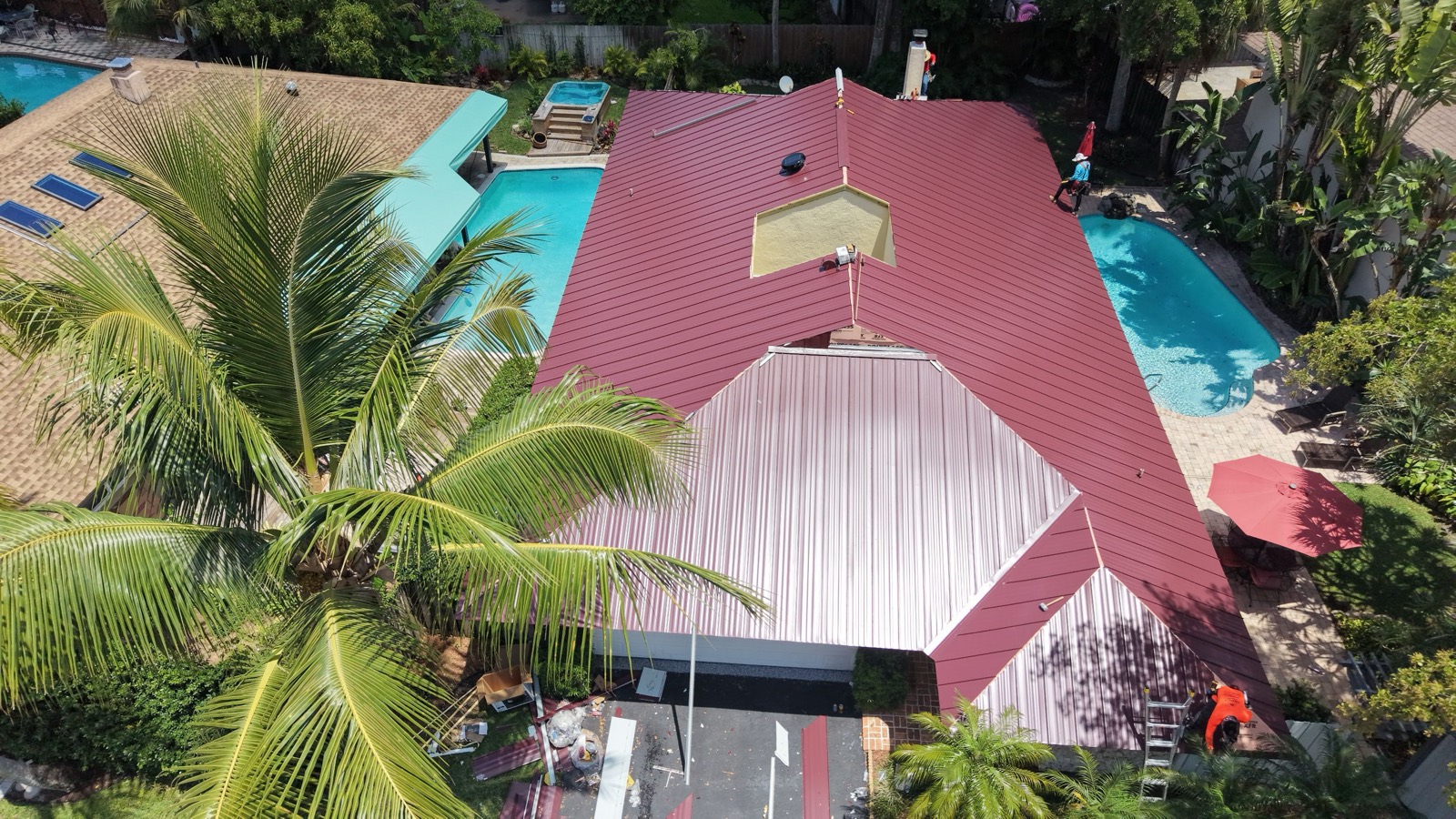
Metal Roofing in Cutler Bay, FL
Standing-seam and metal panel roofing built for South Florida — engineered to shrug off hurricane winds, reflect the Miami-Dade sun, and last for decades.
Built for Florida, built to last
A quality metal roof can last 40–70 years, reflects heat to lower your energy bills, and offers excellent wind resistance — a real advantage in hurricane country. The clean lines of a standing-seam metal roof also give a home a modern, premium look.
We install standing-seam and metal panel systems with proper underlayment and trim detailing. It's a bigger upfront investment than shingles, and we'll show you the long-term math so you can decide with clear eyes.
- 40–70 year lifespan. Far longer than a typical shingle roof.
- Wind & storm resistant. A serious advantage in South Florida.
- Energy efficient. Reflects heat and can lower cooling bills.
- Premium look. Clean standing-seam lines that lift curb appeal.
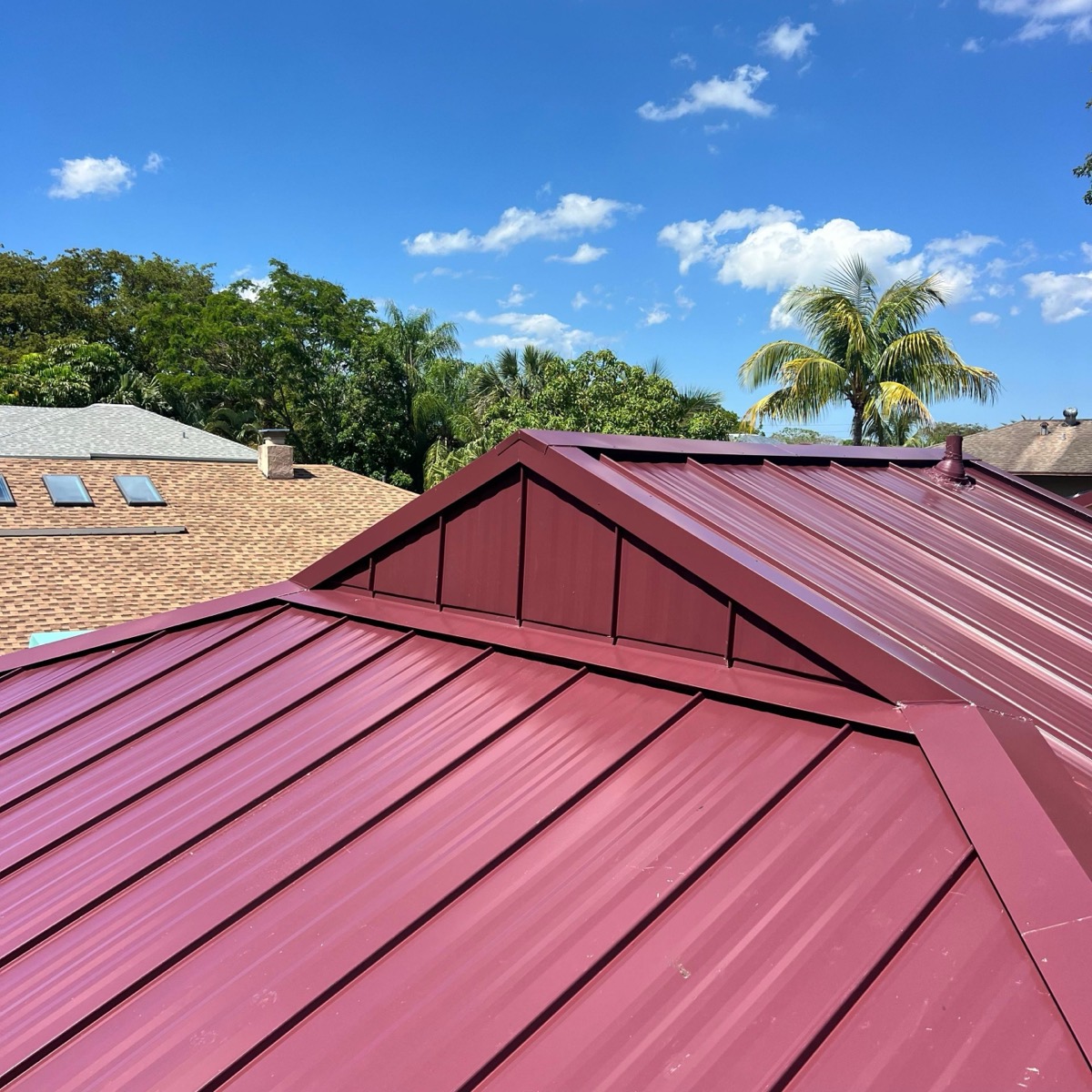
Why Metal Wins in the High-Velocity Hurricane Zone
Miami-Dade sits inside Florida's High-Velocity Hurricane Zone (HVHZ), the strictest wind region in the state's building code. Every roof here has to survive design wind speeds that would peel an ordinary roof apart elsewhere. Metal earns its place in the HVHZ because approved systems are tested and documented for exactly these conditions. Look for a Miami-Dade Notice of Acceptance (NOA) or Florida Product Approval — that paperwork confirms the specific panel, clip, fastener, and underlayment assembly passed uplift and impact testing for our zone. Because our code also tests for windborne-debris impact, an approved metal system is built to take a hit from flying debris, not just steady wind pressure. A properly engineered standing-seam or metal panel roof locks together as one continuous, interlocking skin, giving wind far fewer edges to grab than a field of individual shingles. Fastened into a sound deck and installed to its NOA, metal is among the most wind-resistant coverings you can put over a South Florida home.
Standing-Seam vs. Exposed-Fastener Panels
Two families of metal roof dominate Florida homes, and the difference is worth understanding. Standing-seam systems use concealed fasteners: clips hold the panels to the deck while the screws hide beneath raised, interlocking seams. Nothing penetrates the weather surface, the panels are free to expand and contract in the heat, and there are no exposed rubber washers to dry out — which is why standing seam carries the premium look and the longest service life. It also handles lower roof slopes than shingles can and adapts well to the complex rooflines and additions common on South Florida homes. Exposed-fastener panels, like the classic 5V-crimp, screw straight through the face of the metal with sealing washers. They cost less and install faster, which makes them a smart pick for outbuildings, workshops, and budget-minded projects. The trade-off is upkeep: those washers face decades of UV and thermal cycling and may need attention over the roof's life.
Built to Beat the South Florida Heat
Metal is one of the best answers to a relentless sun. Bare metal reflects much of the solar energy that shingles tend to absorb, and factory cool-roof finishes — the PVDF and Kynar coatings on quality panels — push that reflectivity even higher. Many reflective metal colors carry an ENERGY STAR rating. In practice, a reflective roof stays cooler at the surface, so less heat radiates down into your attic and living space, easing the load on an air conditioner that already runs hard from spring through fall. Pair the panels with proper attic ventilation and a radiant-barrier underlayment and the whole assembly becomes a heat-management system, not just a cover. For many Cutler Bay homeowners, lower attic temperatures and a more comfortable home are the everyday payoff, on top of the storm protection.
Salt Air, Coastal Finishes & the Noise Myth
Living near Biscayne Bay adds one more variable: salt. Salt-laden air is hard on metal and fasteners, so the right specification matters far more than the lowest bid. Aluminum panels resist coastal corrosion better than bare steel, stainless or coated fasteners outlast standard ones, and a marine-grade PVDF finish guards the surface against salt and UV alike. Get those choices right and a coastal metal roof performs for decades; get them wrong and you invite premature corrosion. As for the old complaint that metal roofs are loud — that reputation comes from barns where panels sit over open framing. On a house, the metal lies over a solid plywood deck and underlayment that dampen rain to a level comparable with any other roof. Most homeowners are surprised by how quiet a modern metal roof actually is.
Lifetime Cost, Insurance & Who Metal Is Right For
Metal does cost more upfront than asphalt shingles, and we will never pretend otherwise — the value shows up over time. A quality metal roof can last 40 to 70 years, while Florida's sun and storms often wear shingles out in 15 to 20, meaning one metal roof can outlast two or three shingle replacements. A code-approved, properly installed roof may also help you document features for a wind mitigation inspection, the report Florida insurers use to calculate credits. Metal makes the most sense for long-term owners, coastal homes that demand corrosion resistance, homeowners after a clean modern look, and agricultural or outbuildings that need durable, low-maintenance cover. If that sounds like your home, the next step is simple: a free inspection and a written estimate, with no pressure. As a licensed, family-run Cutler Bay roofer serving all of Miami-Dade, we will tell you honestly whether metal is the right call.
Free inspection & honest quote — no pressure.
Get My Free QuoteCommon questions
Is a metal roof worth it in Florida?+
Are metal roofs noisy when it rains?+
Does a metal roof cost more than shingles?+
How long does a metal roof last in South Florida?+
What is the difference between standing-seam and exposed-fastener panels?+
Will a metal roof lower my energy bills?+
How well does metal hold up to hurricanes?+
Explore our roofing services
Ready for a roof you can trust?
Free, no-pressure inspection in Cutler Bay and across Miami-Dade. Financing available for qualified homeowners.